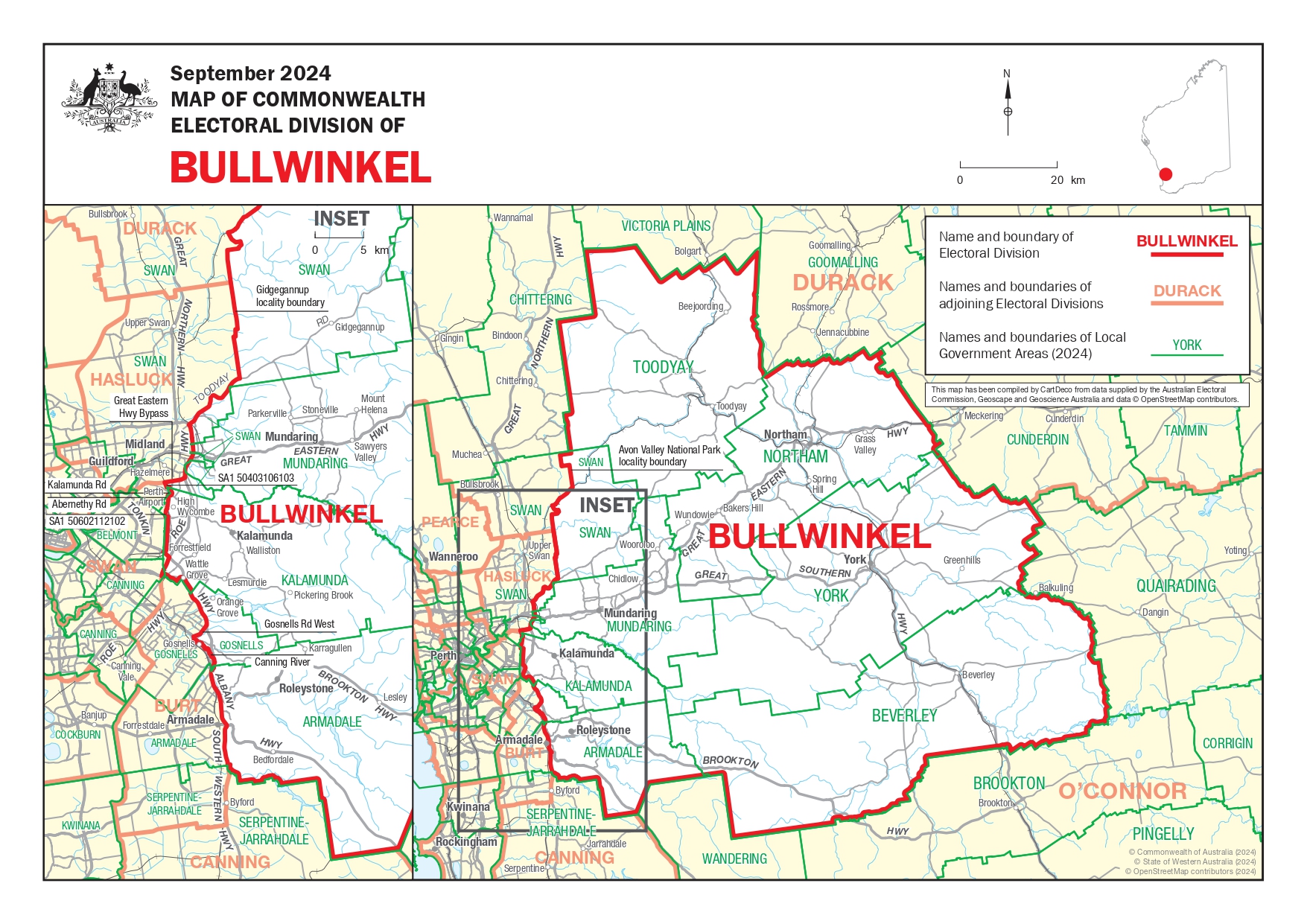
“Bullwinkel is the first electorate to be named after a nurse, and it's the 18th electorate to be named after a woman, but I don't want anyone to worry over there—there are still 88 electorates named after men. Bullwinkel is the fourth-largest electorate in WA, and it consists of the foothills, the hills and the rural portion of the western Wheatbelt. The localities of the foothills and the hills include a mix of newly established suburbs, historic villages, large state water catchment areas, national parks, orchards and residential homes. It's beautiful. The rural area of Bullwinkel consists of four historic Wheatbelt towns: Beverley, Toodyay, York and the largest of the four, Northam, home of WA hot air ballooning. As well as the townspeople, these rural communities include passionate farmers who produce our food and our agricultural exports. They see the ever-changing impact of climate change, and, while they have thankfully and recently got their barley markets back, they are still transitioning to the ban on live sheep export by sea.
All three areas of Bullwinkel—the foothills, hills and rural areas—boast amazing communities along with stunning natural but sensitive and bushfire-prone environments. I look forward to working closely with the nine local governments across Bullwinkel to deliver improvements in line with their community strategic plans as well as our Labor Party commitments—commitments of a Medicare urgent care clinic and childcare centre in Mundaring, a Medicare mental health centre in Kalamunda, telecommunications improvements and upgrades to the volunteer bushfire brigades. And I look forward to working with and assisting the farmers of Bullwinkel as they transition away from the live sheep export trade.
The name of Bullwinkel carries significant historical weight and a powerful legacy. As the inaugural member, there are a few things I'd like to tell you about the remarkable Lieutenant Colonel Matron Vivian Bullwinkel. In 1942, Vivian was one of 65 Australian nurses who fled Singapore in response to the Japanese invasion in World War II. After surviving a bombing at sea of the Vyner Brooke ship, she and her colleagues surrendered only to face atrocity. Vivian was the sole survivor of the infamous Bangka Island massacre, whereby she and 21 of her fellow nurses were assaulted, marched out into the ocean and machine-gunned down. After surviving this war crime, she was forced to surrender several weeks later and endured three years of unimaginable hardship, suffering as a prisoner of war alongside 65 other Australian Army nurses. Vivian was only 26 years of age at this time, only a few years older than my own daughter. I cannot imagine the hardship of parents sending their daughters and sons off to a foreign country to fight for democracy and I thank them for their incredible sacrifices and services.
Not only did Vivian survive World War II but afterwards she went on to testify against the Japanese at the war crimes tribunal in Tokyo. She spent the rest of her life advocating for her fellow nurses wanting to tell their story, not wanting them to be forgotten. She retired at 60 years of age, married and moved to Perth, where she lived for a further 24 years. In 1992, Vivian bravely returned to Bangka beach, accompanied by WA Labor Senator Pat Giles—No. 2 nurse, incidentally—to open a memorial dedicated to her comrades on the beach”